
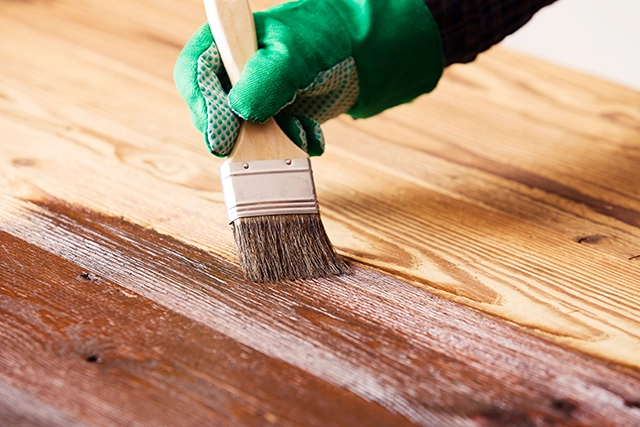
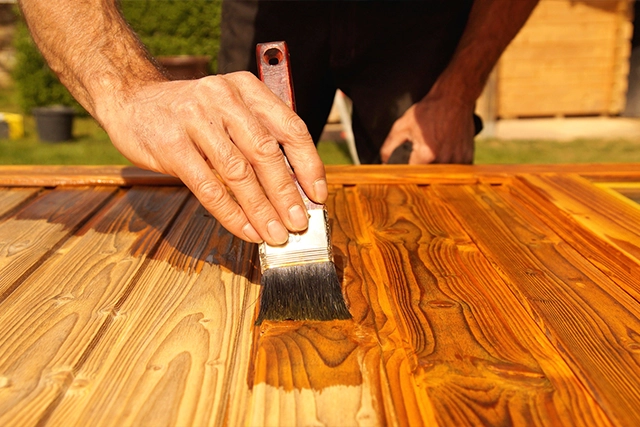
Grain lines, knots, pores, and natural color all affect how stain settles into the wooden surface. Our wood staining services focus on bringing out those details while giving your wood a cleaner, richer, more even appearance. We prepare each wooden surface so the stain can soak in at a steady rate. Proper sanding opens the wood grain. Surface cleaning removes dust. Careful stain application controls color depth. Those steps matter because uneven preparation can leave blotches, dark patches, or weak color.
For homeowners, we stain doors, trim, railings, cabinets, wood features, and other interior or exterior wood surfaces. For commercial properties, we handle stained wood finishes where appearance and consistency matter across larger areas. You get wood that feels intentional, warm, and well cared for. The grain stays visible. The color gains depth. The finished surface fits naturally with the surrounding space instead of looking coated or artificial.
Different woods accept stain in different ways. Pine can absorb color unevenly. Oak has open grain that often shows stain deeply. Maple has tighter grain and may need extra care before color application. Our process accounts for the wood species, current finish, surface condition, and desired stain tone before work begins.
Our wood staining process may include:
You see the benefit in the finished wood. Color looks steady from one section to the next. Grain remains easy to see. Corners, edges, panels, and detailed areas receive the same careful attention as broad surfaces.
Wood surfaces shape how a room, entry, office, shop, or property feels. A faded railing can make an entrance feel tired. Unevenly stained trim can distract from an otherwise clean room. Worn wood features can lose the depth that once made them attractive.
We stain residential and commercial wood with the same focus on surface condition and color control.
The result is easy to notice. Wood grain appears clearer. Color feels more consistent. The surface looks cared for without losing the natural look that makes real wood appealing.
Choosing a stain is about more than picking a light or dark shade. The original wood color affects the final tone. Grain density changes how deeply pigment settles. Existing stain can influence the next coat. Lighting can make the same stained wood look warmer, cooler, deeper, or softer throughout the day.
We help create stain results that suit the wood already in your San Jose property. A lighter stain can keep grain patterns open and airy. Medium tones can add warmth while keeping natural variation visible. Darker stains can create stronger definition across boards, panels, trim, or wood details. Our goal is simple. The stain should work with the wood, the grain should remain visible, and the color should look steady across the finished surface.
With Guecon Painting, your wood receives careful preparation, controlled stain application, and close attention to absorption. You get a finished surface with richer color, clearer grain, and a natural look that feels right in both residential and commercial spaces.
We choose stain tones that suit the natural wood species and its existing undertones. This helps your doors, trim, cabinets, or other wood features keep a rich, inviting look you’ll enjoy seeing every day.
Grooves, corners, raised panels, and carved sections need steady stain coverage. We give these areas close attention so your wood features look finished from edge to edge. This also includes the small details people notice up close.
No two boards absorb stain exactly the same way. We account for natural grain shifts, knots, and color changes so the finished wood keeps its real appeal while still feeling balanced, warm, and visually connected.
Fresh stain needs time to settle before regular handling. Light contact too soon can leave fingerprints, dull spots, or uneven marks. Keeping the surface undisturbed during the early drying stage helps the stain set cleanly and keeps the finished wood looking smooth.
Wood stain can soften the look of some light scratches, faded spots, and minor color changes, especially when they follow the grain. Deeper dents or damaged fibers may still remain visible because stain adds color rather than filling the wood itself.
Yes. High humidity can slow the drying process because moisture in the air keeps stain from setting as quickly. In San Jose, indoor conditions, airflow, and the location of the stained wood can all influence how soon the surface is ready for normal use.
In many cases, yes. The existing stain color affects how a new tone appears, so changing from one shade to another may require extra surface work first. Moving toward a deeper shade is often more practical than trying to create a much lighter result.
Sticky areas often happen when too much stain remains on the surface instead of soaking into the wood. Slow drying conditions can also contribute. Proper removal of excess stain helps prevent tacky patches and gives the stained surface a cleaner, more comfortable feel.
Guecon Painting refreshes homes and businesses with skilled painting, neat application, rich color, and dependable care without leaving any gaps behind.